a Ministry of Food, Frugality and Family...

Monday, January 12, 2015

Beef Stock that Morphs into Tomato Beef Soup and then Beef Gumbo

To make this simple tomato beef soup, use beef stock (retaining some of the cubed beef from making the stock) adding one onion and one can of tomato paste at .49 cents.  For the next day, you can retrieve the tomato beef soup/stock reviving it by adding pasta or rice.

However, if you want to use the same soup stock again then don't add the pasta/rice directly... simply boil the pasta on the side and add to individual bowls even if you will still use pasta as a soup filler for the next soup on the daily menu.

In this way, the tomato beef soup can morph into beef gumbo by adding fresh okra... the pasta can be directly added but rather best to keep it out and boil on the side. Pasta cooked in soup/stock gets mushy and soaks up all the liquid.

~ Tutti a Tavola

Sunday, January 11, 2015

Delicious Eggplant Lasagne

Price per serving for four: $3.01


You will need to buy 3 large eggplants. I found three beauties at ALdi quite reasonably priced - $1.29 each. You will need to buy canned crushed tomatoes. I ran out of my fresh frozen just last week. ALdi now sells an organic line. All items are excellent including canned crushed tomatoes. The price per 28 oz can is just $1.49. I like to have more than a few cans kept in the pantry. For lasagne a good quality mozzarella is necessary. ALdi has such cheese. A large bag cost just $3.69. I have, bread crumbs, parmesan and olive oil on hand (including canned tomatoes and paste) and I hope you do too. A restocked pantry is frugal. Items that have long shelf life are best to buy and keep in the pantry,. They are basic and easily used for many different dishes.

Take from the pantry list:
Olive oil
Bread Crumbs
Dried Herb Seasoning

Get a large glass baking dish. 9x13 and then take out a large cookie sheet and drizzle the bottom with olive oil. Turn on the oven to F375. Wash, peel and slice length wise your eggplant. Cover the cookie sheet with slices, drizzling a bit of oil onto each slice and a sprinkle of dried herb seasoning; then roast in the oven til tender. You will have about 3 rounds of this until you have pre-cooked all the eggplant slices.
Using those pre-cooked tender slices, you will construct your lasagne in the traditional way of layering, treating the pre-cooked eggplant slices as noodles. First, drizzle olive oil in the bottom of the glass baking dish. Then put one layer of eggplant, cover that will bread crumbs and then sauce followed by shredded mozzarella. Continue this layering until you have filled the dish. The top should be a covering of shredded cheese, parmesan and dried herb seasoning. Bake in the oven til bubbling and the top has started to brown. Remove and let rest for 10 min before serving as it is very hot. As the lasagne cools, it will be easier to cut and serve.
*a few mild Italian sausages in an onion and red pepper sauce can be included in the dinner.


Saturday, January 10, 2015

Good Food Combinations!

Fermented Foods

USDA research service microbiologist Fred Breidt says -“properly fermented vegetables are actually safer than raw vegetables, which might have been exposed to pathogens like E. coli on the farm…With fermented products there is no safety concern. I can flat-out say that. The reason is the lactic acid bacteria that carry out the fermentation are the world’s best killers of other bacterica,” – San Francisco Gate, June 2009.
I remember my parents making homemade sauerkraut in the basement of our house. I liked the taste but not the smell. While in Europe, I noticed that all dinner meals were served with a fermented vegetable of some kind, usually as a salad or condiment. It is widely know that fermented foods help with digestion. I just read on a blog called "cheeseslave" that there are eight good reasons to eat fermented foods. 
 8 Reasons to Eat Fermented Foods

1. Fermented foods improve digestion.

Fermenting our foods before we eat them is like partially digesting them before we consume them. According to Joanne Slavin, a professor in the Department of Food Science and Nutrition at the University of Minnesota, “…sometimes people who cannot tolerate milk can eat yogurt. That’s because the lactose (which is usually the part people can’t tolerate) in milk is broken down as the milk is fermented and turns into yogurt.”

2. Fermented foods restore the proper balance of bacteria in the gut.

Do you suffer from lactose intolerance? Gluten intolerance? Constipation? Irritable bowel syndrome? Yeast infections? Allergies? Asthma? All of these conditions have been linked to a lack of good bacteria in the gut.

3. Raw, fermented foods are rich in enzymes.

Your body needs [enzymes] to adequately digest, absorb, and utilize the nutrients in your food. As you age, your body’s supply of enzymes goes down.

4. Fermenting food actually increases the vitamin content.

Fermented dairy products show an increased level of folic acid which is critical to producing healthy babies as well as pyroxidine, B vitamins, riboflavin and biotin depending on the strains of bacteria present. [1. Vitamin Profiles of Kefirs Made from Milk of Different Species. International Journal of Food Science & Technology. 1991. Kneifel et al]”

5. Eating fermented food helps us to absorb the nutrients we’re consuming.

You can ingest huge amounts of nutrients, but unless you actually absorb them, they’re useless to you. When you improve digestion, you improve absorption.

6. Fermenting food helps to preserve it for longer periods of time.

Milk will go bad in the fridge but kefir and yogurt last a lot longer. Sauerkraut, pickles and salsa will keep for months. And if you’ve got a huge batch of produce in your garden that you don’t know how to use up — ferment it!

7. Fermenting food is inexpensive.

You can use inexpensive cabbage to make sauerkraut for instance.

8. Fermenting food increases the flavor.

The cheeseslave blogger goes on to remind us that there’s a reason humans have historically enjoy drinking wine and eating stinky cheese. There’s a reason we like sauerkraut on our hot dogs and salsa on our tortilla chips. Its good for us and it tastes good! Historically, humans all over the world have been fermenting food since ancient times. The earliest evidence of winemaking dates back to eight thousand years ago in the Caucasus area of Georgia. Seven-thousand-year-old jars which once contained wine were excavated in the Zagros Mountains in Iran. There is evidence that people were making fermenting beverages in Babylon around 5000 BC, ancient Egypt circa 3150 BC, pre-Hispanic Mexico circa 2000 BC, and Sudan circa 1500 BC. There is also evidence of leavened bread in ancient Egypt dating back to 1500 BC and of milk fermentation in Babylon circa 3000 BC. Food and wine are enjoyed even in the Bible.

Thursday, January 8, 2015

'MeatLoaf' ~ The Other White Meat

Price per serving for two: $2.06

You will need to buy a  1 lb package of ground turkey ($2.78) and 1/2 lb of ground mild pork sausage ($1.34).  These ingredients you should have on hand in your pantry: seasonings, plain bread crumbs, oats, egg, and mayonnaise.

Take from your pantry list:
Oats
Sea Salt
Olive Oil
Black Pepper
Bread Crumbs
Garlic Powder
Red Pepper Flakes
*Dried Herb Seasoning
 rosemary, mint and oregano.

1 egg
Mayonnaise

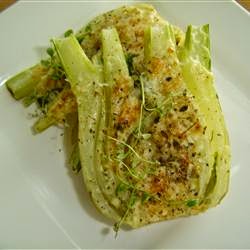
Turn your oven to F375. Take a glass mixing dish out for the ground turkey and mild pork sausage.  Add to the ground meats: sea salt, black pepper, red pepper flakes and garlic powder (to taste) and as much dried herb seasoning as you like. Then crack in your egg. Add to that, one cup of oats, and 1 cup of dried bread crumbs. Now, take a glass baking dish and rub the bottom with olive oil and into that a dollop of mayonnaise, spreading it around. Form your meat mixture into a football and lay it in. Top with a sprinkle of dried mint and oregano. Set it in the oven to bake for 30 - 35min. When the time is up, take a meat tester to check if the middle is cooked. Use the 'done' temp for med. pork. You can offer any side you like, potato or other vegetable. Something that I like to use is fresh or cooked is fennel. It is pretty easy and quick to fix either way. The cooked fennel is halved first and steamed in a shallow stock until all moisture is absorbed. Then olive oil is added and the fennel is sauteed on both sides, finish with grated parmesan. The salads are made by chopping fennel root or slicing it and mixing it up with fresh sliced citrus or apples (I can't do apples) and thinly sliced raw onion. This combination can be laid on a bed of preferred shredded greens. The creamy salad is made in the same way adding mayo for cream or yogurt. Both salads can be topped with chopped nuts and pulled fennel tops; to this, I also like a drizzle of olive oil and squeezed citrus.
.


Timely Eating ~ Eat your fill When it is the Right Time to Eat

Timely Eating Improves Digestion

Everyone has an internal clock and it is this internal clock that sets your body’s rhythm. It is important that you set an eating schedule so that your body can maintain this rhythm. Your body becomes accustom to an eating schedule and starts producing digestive enzymes in preparation for food.Your eating schedule should include both the times of day that you eat and the types of food groups that you eat. Eating odd foods or at odd times of day will disrupt your body’s rhythm. When your rhythms are disrupted, your digestion is disrupted and the result is digestive discomfort.You can train your body. When you consistently eat at certain times of the day your body becomes accustomed to digesting at those times and starts to pre-produce digestive enzymes in anticipation of the meal. This is its way of preparing for food. Your body is more ready to receive food and this helps complete the digestion process. In addition to setting times for meals, you should stick to the same types of food on a regular basis. This doesn’t mean eating the same exact food every day, just sticking to similar food groups as often as possible. You’ll want to set up a system where you have primary foods, secondary foods and exotic foods. Primary are those eaten every week, secondary are condiments to the primary, and exotic are those that you eat on rare occasions. When you eat this way, your body will not only know when to expect food, but it will also know what type of food to expect. This leads to a more complete digestion of your food and in turn you’ll feel more energized and vibrant.
Source retrieved from ~ http://www.puristat.com/bloating/food-combining.aspx

I couldn't agree more with the information above. From my own observations, we spend too much time thinking about what to eat than we do about when to eat. Your body does an eating rhythm, when you are hungry. At least that is how it starts out. Babies need to eat exactly when they are crying out in hunger. As they grow, parents introduce more time-space into their schedules. Parents learn too that keeping to that schedule results in a happy healthy child. As we grow and become adults, an eating schedule should be kept. This is in my opinion the key to good digestion and health. In some countries, this is quite strict, at least from my own experiences, the Swedes, the Italians and Poles like to eat on time, the time they set. When I lived abroad, I spent most of my time in Poland. There, I was introduced to a different eating schedule. Poles eat 4 times a day. For breakfast, there were usually open faced sandwiches served along with scrambled eggs, and boiled sausages with coffee or tea. Then a smaller second breakfast of fresh or jarred fruit, yogurt or cottage cheese and even another open faced sandwich (with a slice of tomato/cucumber) was consumed before noon. A three course dinner (soup, meat/potatoes/cake or fruit salad) was served between 3-5 pm and lastly, a late supper could be eaten as late as 8 pm consisting of open faced sandwich with just a slice of cheese on a piece of bread with tea. I got used to those 4 shared meals a day. I never snacked in between because I was not hungry between meals. Given that, I think that though Poles eat more fat, they eat less sugar and include in their meals fermented vegetables as well as sour cream, kefir and homemade cottage cheese. In sum, here, there, anywhere, eating on time and eating together with other people is so important to good digestion and all around well being. Growing up here, as I look back, my parents kept good meal times. I don't remember snacking having got my fill when it was time to eat. Getting you fill when it is time to eat is being brainy and also keeping in mind that when you sit down to a table with family or friends to eat a meal, you are consuming much more than food. Eating is social and there are benefits that come with eating with other people, you eat slower and you benefit by getting affirmation of who you are and who you belong to, group cohesiveness comes out of social interaction.  Identity is an important part of who you are and it is reflected in the food you share and eat. Who doesn't love to share recipes about their favorite dishes especially those we share as a group, a society, a nation.

Tuesday, January 6, 2015

Northern Italian 'Meaty' Spaghetti Bolognese

Price per serving for three: $2.26

You will need to buy a small package of ground pork and the same of ground pork sausage. You could also use ground pork and ground turkey. Being Brainy, I bought a 1 lb package of ground pork and sausage which I mixed together and then halved, freezing the other half for future use. The two packages together cost $7.28 divided on two = $3.64 for this meal. You will need to buy pasta if you don't have in the pantry. The most I ever pay is per package is $1.50. You will need an onion and parmesan cheese; as well as, a large can of crushed tomatoes unless you have fresh frozen from your own harvest. One 28 oz. can of crushed tomatoes cost $1.65. From Aldi you can usually get it for about that much and its certified USDA organic. I also buy their grated Parmesan.

Take from your pantry:
1 Clove of garlic
Coconut Oil
1 Onion
Olive Oil
Parmesan Cheese
*Dried Herb Seasoning
  rosemary, mint and oregano

Get a large stock pot of water with a pinch of salt boiling to cook the pasta - I like to use a Bucatini noodle. Then take out your covered skillet  on med flame and add 3 tbs of olive oil and 1 tbs of coconut oil. Or just use olive oil. I don't think my Nonna would ever have used coconut oil, but if it had been available, she might have. I like to use it because it bubbles around the meat and does not burn as quickly as other oils. Add your ground meats, breaking the bulk of it into crumbly pieces. Once that is done, add diced or crushed clove of garlic, add what you like depending on preferred taste. Chop your onion finely and add that as well. Stir and cover, reduce the flame to low. When the onion is transparent, add your crushed tomato and sprinkle in as much dried herb seasoning as you like. Since, I like a juicy sauce, I do not add any tomato paste to this recipe. Cover the sauce and let simmer for 20-25 min.
During this time, add the noodles to your boiling water and stir. Set the table, putting out extra grated fresh parmesan. When the noodles are tender, drain and spill them out onto a serving platter immediately. I don't like rinse my noodles, risking that they will get cooled. The sauce is ready at just about this time, so go ahead and lay it on. Gather everyone to the table, say a blessing as there is plenty 'Abbondanze'!


* Bolognese sauce is an Italian meat-based sauce for pasta which originates from Bologna, a city in Northern Italy. A thick, full-bodied meat sauce that's a staple of northern Italy's Bologna. The term alla Bolognese (in French, à la Bolognese) on a menu designates a pasta or other dish sauced with ragù, which is a meat based sauce. The words for Italian ragù and French ragout (though for entirely different dishes) are both derived from the verb ragoûter, which means "to stimulate the appetite." A true Bolognese sauce includes a small amount of tomatoes or tomato paste in a rich sauce with meat and other ingredients. It tends to be served on thick pasta, as larger pasta shapes hold meat much better than finer pastas such as capellini. Variations on the sauce outside of Italy often include much more tomato and vegetable ingredients, which change the flavor profile considerably.  This history of the Italian Bolognese sauce was retrieved from http://www.spaghettibolognese.info/p/history.html

Monday, January 5, 2015

Beneficial Kale Backlash


Kale Beneficial 2015 ??? Given the Recent Backlash, I say be brainy and eat what your body can manage. 

In my most recent posts, I stated that you should eat what you can afford and what your body can manage, as in 'what agrees with it'. That's my food philosophy. I also mentioned, in a previous post, that I have intestinal problems with certain foods - insoluble vegetables and fruits. So, since Kale is insoluble, I am not falling apart over this backlash. While kale provides numerous good things, it can cause problems for you as it does me and not just because it is insoluble. If you are eating too much of it, you could face some serious backlash.  According to an article in The New York Times from January 2014, kale consumption was  linked to hypothyroidism. Throughout 2014, follow-ups abounded, and soon enough kale was taking hits for causing everything from kidney stones to arthritis. Since, then Kale has rebounded, but currently promoted as good for you in a 'well balanced diet'. Among positive and negative press, it was recognized that  kale may indeed affect the thyroid due to the goitrogens it contains, this effect may be decreased with cooking as stated by Kristen Kirkpatrick RD, the manager of nutrition services at Cleveland Clinic Wellness Institute. If you simply can't let go of kale, it was suggested to minimize other thyroid-impacting foods like Brussels sprouts, cabbage, and broccoli, to make room for more kale in your diet. I say be as brainy about Kale as you are about all other foods  ~ everything is permissible but not everything is beneficial 1 Cor 10:23.


Main source ~ https://www.yahoo.com/health/kale-backlash-should-you-stay-devoted-in-2015-107229567912.html